Hotspots

hotspots

Hotspots

In this section, we’ll go over what hotspots are and exactly how they work, which is essential for planning your farm and properly utilising the spots.

Hotspots are locations spread all over planets that are dense in some kind of resource.

There are 3 different types and then some subtypes.

xainesworld logo

There are 3 different types of Hotspots and then some subtypes

+ First we have the Electromagnetic +

These are your Power spots and are THE way to fulfil your power needs in almost every possible circumstance.

electromagnetic generator
xainesworld logo

Other methods of gaining power include Solar Panels and Biofuel Reactors, both of which supply 50kps per module, though the Solar Panel only supplies power during the day and can fluctuate at times like when placed at the poles.

Solar Panel
Biofuel Reactor

To utilise them in a constant setup you’d need batteries and lots of them!!!

battery
battery
battery
battery
battery
battery
battery
battery
battery
battery

Biofuel Reactors require constant fuel to run ……………

CONDENSED CARBON
CONDENSED CARBON
CONDENSED CARBON
carbon stack

I would suggest, even for a new save, just skipping right to Electromagnetic Generators that utilize hotspots.

It is almost guaranteed that there will be an Electromagnetic hotspot within 1000u of the base computer that you can get to, I’ll be covering how the base extension technique works in the next section.

thumbs up
xainesworld logo

+ Secondly there are the Mineral or Deep Vein Hotspots +

These provide a location to place Mineral Extractors to gain huge amounts of a particular resource indefinitely.

There are 21 different types of Mineral Hotspot, though each planet will only usually have 3 This will always be a Metal Hotspot, so either Copper, Cadmium, Emeril, Indium or one of the 4 Activated versions of these.

copper
cadmium
indium
activated copper
activated cadmium
activated indium

The second will be a Biome resource, but only if it is one of the 6 primary Biomes, so these are Paraffinium, Dioxite, Phosphorus, Pyrite, Uranium and Ammonia.

PARAFFINIUM
dioxite
PHOSPHORUS
pyrite
uranium
ammonia

If it is not one of the big 6, then the second will be one of the tertiary minerals, of which the 3rd will be also.

These are Cobalt, Gold, Magnetised Ferrite, Salt, Silver and Sodium.

cobalt
gold
magnatised ferrite
salt
silver
sodium

This enables things like single-base Nanite farms to be made on none of the ‘big 6’ worlds that have both Silver and Gold as well as other combinations.

Note: Rusted Metal appears to be specific to worlds without an atmosphere, though more research needs to be done on this, though it’s cool to think they may have thought with the logic that a planet with an atmosphere would magnetise the ferrite.

Then there are the 4 gases, which each planet will either have either 0 or 2 of

If it is one of the ‘big 6’ then you will find both Oxygen as well as one of the 3 primary gases. 

Cold and Radioactive will have Radon, Lush and Toxic will have Nitrogen, and Hot and Dusty will have Sulphurine.

radon
Nitrogen
Sulphurine

Surveying

To find these hotspots, you are going to need the Survey Device.

This is a Multitool Technology, the blueprint for this can be purchased from the Multitool researcher in the Nexus for Nanites

Once built in your active multitool, you will be able to activate your Analysis Visor and switch between what is now 4 different modes, there is the standard Analysis Visor, used for searching out local resources and points of interest as well as scanning Flora, Fauna and Minerals, then there are 3 Surveying modes, the first searches for Electromagnetic Hotspots, the second for Minerals and the third Gases.

These modes will show you where the closest hotspot is for that type:electric hotspotmineral visorgas deposit

If you are within 400u of a hotspot of the type you are looking for, you can see what class it is, as well as how far from your it is.

To find the direction of the hotspot, just look around you and check the pulses in the centre of the HUD, they will indicate whether you should turn left, right or continue straight.

right survey helmet
s gas

If this hotspot you are searching for is Electromagnetic, then rest assured in that it is a power hotspot, but if it is Gas or Mineral, it could be any of the types available on that planet, and the only way to find out which is to head to the centre of the hotspot at which point it will automatically analyse it and give you the information.

Do note that where you analyse the hotspot is where the hotspot waypoint will show up, this waypoint is only visible in the Survey Device screens unless tagged and will disappear upon reload.

This is not the centre of the hotspot, this is simply where you scanned the hotspot, which is within 5-10u of the centre of it, so if you are looking for the exact centre, just move around that waypoint a bit until you see the density of the waypoint cap.

If you are not within 400u of the nearest of that hotspot type, it will usually still give you enough information to find it, you won’t see the pulse, but you can still faintly hear it, and it will be directional audio.

Meaning, if you need to turn right, then the pulse audio will only sound in your right ear, if left then left ear, reading the straight ahead can be tricky, but from this far off, just boosting in the rough direction will get you within 400u pretty easily.

Class & Generation

Hotspots work on a Class system, there are the typical 4 you find in No Man’s Sky, C, B, A and S.

The Class will determine the output of the Hotspot whether that is resources or power generation per-interface used.

s gas
a electric
b mineral
c gas
xainesworld logo

The Electromagnetic Hotspots, C Class means a maximum of 150kps per Electromagnetic Generator, B Class is 220, A is 250 and S is 300, these are shown in the Hotspot scanning screen as a percentage, which for C to S is 50%, 73%, 83% and 100%.

When it comes to Mineral and Gas Hotspots, the numbers are a little different.

C Class Gas and Mineral Hotspots offer a maximum per extractor of 250 or 40%, B Class have a maximum of 375, which is 60%, A are 500, or 80% and S Class have a maximum of 625, which is, of course, 100%.

As for generation and how likely you are to find specific classes of each Hotspot, I have some numbers for you from the game files.

In the files, Electromagnetic has its weighting, then all 3 minerals have identical weightings to each other but different to Electromagnetic, and then both gases have separate yet identical to each other weightings to.

These weightings can be taken in 2 ways: –

Either, the generation system decides which of the 6 options will be present in the hotspot generation location, then decides the class, which is the most likely, or all weightings are taken into consideration at once and both the type and class are decided in one calculation.

Each type has its probability weighting, which makes the first method the most likely while already being the most logical.

If we take this into account on an example world that is in a red star system, so its first Mineral is Cadmium, that is Lush, so its second Mineral is Paraffinium, the third mineral is as far as we no random within the possibilities, so let’s go with Cobalt.

As it is lush, it’s first Gas is Nitrogen and as it is a planet with an atmosphere, it’s second gas is Oxygen.

Counting Electromagnetic Hotspots to, as all worlds have them, you have a 1 in 6 chance of finding a hotspot for any of those 6 hotspot types.

It is not as you may assume as I did, a 1 in 3 chance of finding a Power, Mineral or Gas hotspot.

50% of the time, you will find on of the 3 minerals, 33% of the time you will find one of the 2 gases and only 17% of the time will you find a power Hotspot.

At this point, I should note that it is certainly possible that another modifier elsewhere is influencing this, but from the information we have, this is by far the most logical

xainesworld logo
gek bobble

As for the individual Class weightings.

Any Electromagnetic Hotspot you come across will have a 53% chance of being C Class, 31.5% of being B Class, 10.5% chance of being A-Class and only a 5% chance of being S Class.

Any Mineral Hotspot you find has a 46% chance of being C Class, 31% chance of being B Class, 15% chance of being an A-Class and a much better than Electro, 8% chance of being an S Class.

Gas Hotspots have the worst luck of the lot with a 74% chance of being C Class, 15% chance of being B Class, 7% of being A-Class, and a tiny 4% chance of being S Class.

This makes passive factories such as the Activated Indium a little more balanced for the time investment to other more involved farms and factories, as for those, an S-Class does make a huge difference.

But for farms such as the Stasis Device farm that we are focusing on in this guide, the Class doesn’t play that much of a part in it, almost every hotspot in my test build is C Class, this is primarily due to the long 16 hour charge time of the farm dictated by Echinocactus and it’s growth time.

Mechanics

Lastly for Hotspots and how they work: Gaining maximum density and how to be most efficient with their output.

To extract Minerals, Power or Gases from a hotspot, you must place down an interface, for Power, this is an Electromagnetic Generator, for Minerals it is the Mineral Extractor, and for gases, the Gas Extractor.

These interfaces will only output anything if they are placed in its respective Hotspot type, and within that Hotspot, it will output a different amount depending on where it is placed.

Think of a hotspot as a cylinder going up into space.

The horizontal 2D centre of that cylinder is a big old long core, and that core gives the maximum output that the hotspot can produce, the maximum being defined by its class.

Between the core and the outer edge, which is roughly 180 to 200u from the centre depending on the class.

The density and so potential output of the Hotspot will degrade from it’s maximum to 0%.

xainesworld logo

A Gas Extractor in the centre of an S Class Oxygen Hotspot will produce 625 Oxygen per hour, but if you place it around the 200u from the centre mark, it will produce nothing per hour, 100u from the centre mark will be around 312 oxygen per hour.

Because of this, it is most efficient to place your interfaces in the exact centre of the hotspot, and remember that where you analysed the hotspot and so where the marker is, is not the centre, it is just very close to the centre, so walk around the centre with the scanner active and monitor the density of the spot you are standing in to gauge where the actual centre is.

This may lead you to think that you should bunch them as close to the centre as possible, but as the hotspots zone is shaped like a cylinder, it is far more efficient than anything else, to arrange them into a single width and depth tower, going as high as you need for however many interfaces you require.

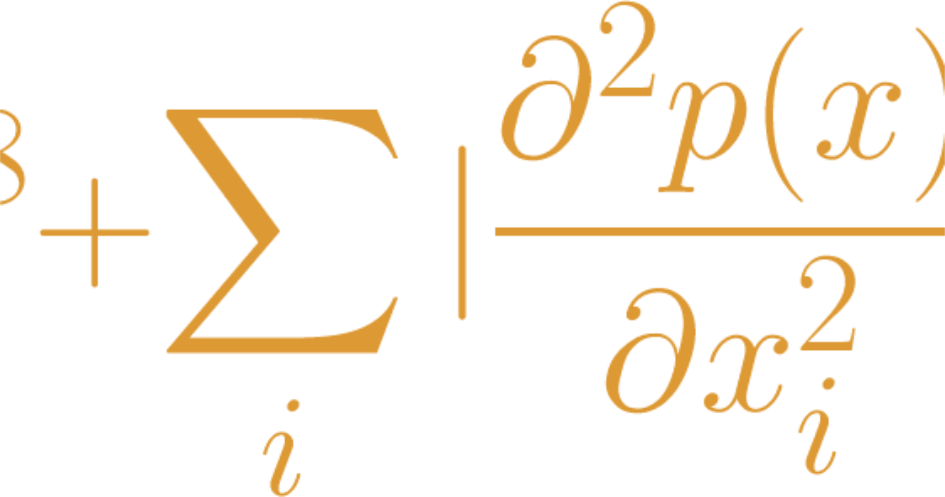
equation2
equation1a
gas extractor
emote amaze

The maximum height you can go with this is 1000u, which is a frankly insane quantity of interfaces, so I wouldn’t worry about not having enough height to do this.

Note that to go higher than 300u, you will have to have your base boundary unlocked, which I’ll be covering in the next section.

Thanks to a patch a few months ago, Mineral and Gas Extractors as well as Supply Depots, can not only be placed on flooring but just about everything else to, so you can just stack them natively, without the need for glitching.

Electromagnetic Generators have been possible to stack since inception, so tower away with your Hotspot interfaces as close to the horizontal 2D centre as possible for best results

4 thoughts on “Hotspots”

  1. I have gone under ground which is a task in itself, But how deep can I go to stack the extractors. And is the hot spot at an assigned elevation or to the core of the planet?

  2. Xaine, in your information you say that a power hotspot is “almost guaranteed” to be within 1000u of a base. Can you confirm there have been cases that there simply isn’t one? The information on the gamepedia wiki has recently been updated to indicate that within your base range it will ALWAYS have 1 of each hotspot type. I personally know this to not be true. I had a few bases I deleted and rebuilt elsewhere where I could find a power spot. I even did extensive testing on the one. I utilized a spiral search pattern and had gone out up to 1100u away without ever finding a power one. I hope I didn’t miss something. I updated the info on the wiki, but it keeps getting changed back to something I knew to simply not be true. Thus leaving frustrations for other players that think they might and never will. Your wisdom is much appreciated.

    1. Xaine

      I have heard a number of accounts of not being able to find one of the required hotspots, not many and it’s an overall rare occurrence, but it isn’t 100% guaranteed to have one of each as far as I know.

      The wiki gets a lot of attempted trolls, the best plan for changing that would be to contact the person who made the most recent edit, or even dDfairchild who oversees the No Man’s Sky wiki and explain the situation.

      1. Here is my long overdue thank you for the reply. That last edit I did on it seems to have stayed, and even carried over to the new one.

Leave a Comment

Your email address will not be published. Required fields are marked *

Scroll to Top